

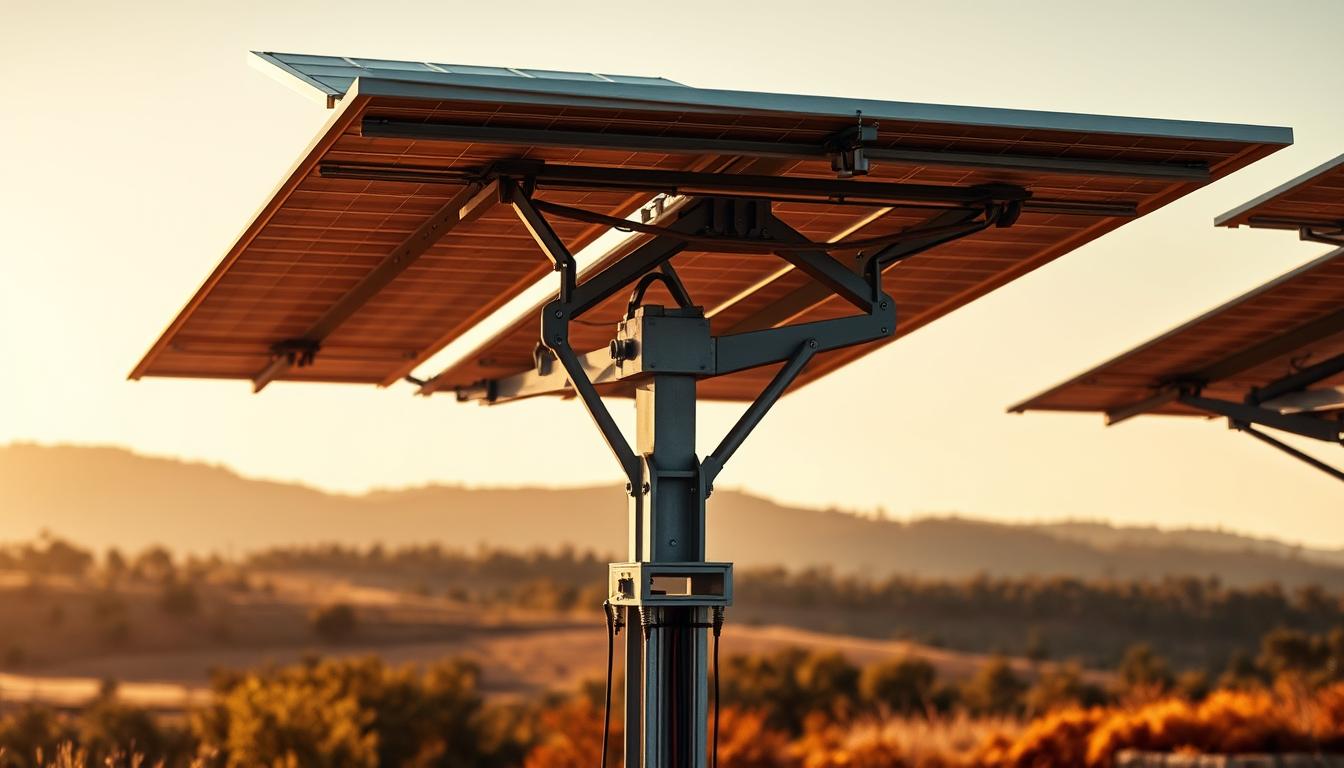
The design of the mounting structure for solar panels is key to getting the most out of solar energy. A well-designed structure not only secures the panels but also boosts their efficiency and durability. According to the National Renewable Energy Laboratory (NREL), the right mounting structure design can significantly improve energy yield by optimizing sunlight exposure and minimizing losses.
This shows a clear link between the quality of the mounting structure and how efficiently solar energy is captured. Understanding this connection is vital for anyone — from homeowners to commercial investors — aiming to maximize solar output.
Key Takeaways
- The mounting structure is vital for maximizing solar output.
- Design optimization directly influences energy efficiency.
- Properly designed structures enhance overall solar energy performance.
- Understanding installation conditions is key to energy yield.
- A well-structured system can lead to substantial energy savings.
The Importance of Mounting Structure in Solar Energy Systems
The role of the mounting structure in solar energy systems is immense. It determines not just the stability and safety of the installation but also how effectively panels capture sunlight.
The angle and orientation of panels, influenced by the mounting design, directly impact system efficiency.
A strong and precise mounting structure ensures the panels withstand weather conditions and stay properly aligned.
Companies like TradePlus Resources provide custom-engineered rooftop and ground-mount structures designed for maximum load-bearing capacity, anti-corrosive durability, and long life, ensuring reliable solar power generation.
Understanding Solar Output and Efficiency
Solar output changes a lot because of several important factors. These include how the panels are set up, their angle, and where they are placed. Getting the most energy from the sun is key to making solar systems work well.
Studies show that setting panels up right can really boost their output. But, if they’re not set up well, they can lose up to 20% of their power.
Key Factors Influencing Solar Performance
Several factors impact solar panel performance:
- Panel orientation and tilt for optimal sunlight capture
- Adequate spacing to prevent shading between panels
- Climatic conditions like humidity, temperature, and wind load
- Material and design quality for structural stability
The mounting structure connects all these elements. When optimized, it enhances both efficiency and reliability, resulting in a durable and high-performing solar system.
What is a Mounting Structure for Solar Panels?
A mounting structure is the backbone of a solar energy system. It holds and positions the solar panels at the right angle and orientation, ensuring maximum sunlight exposure while maintaining structural safety.
Definition and Purpose
A solar mounting structure keeps panels secure, aligned, and accessible for maintenance. Beyond stability, it also plays a key role in improving energy output and longevity.
TradePlus Resources specializes in custom-fabricated mounting structures built from high-quality galvanized steel and aluminum, ensuring strength, precision, and weather resistance for every installation.
Different Types of Mounting Structures
- Roof-Mounted Structures: Ideal for homes and commercial rooftops where space optimization is key.
- Ground-Mounted Structures: Used for large-scale solar farms or open spaces, allowing flexible orientation for better sunlight exposure.
- Pole-Mounted Structures: Suitable for smaller setups, offering elevated placement to reduce shading and ease maintenance.
Each design offered by TradePlus is tailored to terrain type, wind load, and panel configuration, ensuring both safety and performance.
How Tilt Angle Calculations Impact Solar Output
Tilt angle is one of the most important aspects of solar energy system design. It determines how much sunlight the panels capture throughout the year.
Optimal Tilt Angles for Different Regions
| Region | Optimal Tilt Angle (°) |
|---|---|
| Northern India | 30–35 |
| Southern India | 10–15 |
| Western India | 20–25 |
| Eastern India | 25–30 |
Adjusting panels to the ideal tilt ensures consistent energy production year-round. TradePlus Resources offers fixed and adjustable solar structure options that can be modified for regional and seasonal tilt optimization.
Impact of Seasonal Changes on Tilt
As the sun’s position shifts seasonally, adjusting tilt angles helps maintain efficiency. Lower angles capture more sunlight in summer, while higher angles are ideal for winter months.
Using adjustable solar structures from TradePlus Resources enables users to fine-tune their systems for maximum annual yield.
Material Choices for Solar Mounting Structures
hoosing the right material for solar mounting structures affects both performance and lifespan. The most common materials include aluminum, steel, and stainless steel, each suited to specific installation needs.
Common Materials Used in Mounting Structures
| Material | Advantages | Common Use |
|---|---|---|
| Aluminum | Lightweight, corrosion-resistant | Rooftop systems |
| Steel | High strength, cost-effective | Ground-mount systems |
| Stainless Steel | Long-lasting, weatherproof | Industrial and coastal setups |
TradePlus Resources uses pre-galvanized and hot-dip galvanized steel in their structure products, ensuring long-term protection against corrosion and rust — essential for Indian climatic conditions.
How Material Selection Affects Efficiency
Material affects the system’s ability to handle load, temperature, and durability.
- Aluminum ensures easy installation and longevity.
- Galvanized steel supports heavy-duty panels and strong winds.
- Stainless steel provides superior protection in extreme conditions.
By choosing the right material through TradePlus, customers can ensure maximum efficiency and lifespan of their solar installations.
PV Mount System Design and Its Role in Performance
The PV mount system includes rails, brackets, and fasteners — each contributing to the system’s strength and energy yield.
Components of a PV Mount System
- Rails: Provide structural base and support for panels.
- Brackets: Secure the panels to the rails, maintaining alignment.
- Fasteners: Keep all components tightly fixed against environmental stress.
TradePlus mounting systems are engineered with precision-fit components that ensure structural integrity, easy installation, and reduced maintenance costs.
Design Strategies for Maximum Output
- Optimize spacing to reduce shadowing.
- Use adjustable mounts for seasonal tilt variation.
- Conduct structural analysis to ensure performance under wind and load conditions.
TradePlus offers custom-designed racking systems based on project-specific simulations to ensure the highest yield and safety.
Real Output Data: Analyzing Performance Metrics
Looking at real output data helps us see how well different mounting strategies work in solar energy systems. This part compares the results of fixed and tracking mounts in various places in India. Knowing these differences helps pick the best mounting solution to boost solar energy production.
Comparing Different Mounting Strategies
Data analysis helps compare mounting strategies for real-world performance.
| Mounting Strategy | Average Daily Output (kWh) | Increase |
|---|---|---|
| Fixed Mount | 5.0 | – |
| Single-Axis Tracking Mount | 6.5 | +30% |
| Dual-Axis Tracking Mount | 7.5 | +50% |
Solar plants in Rajasthan and Maharashtra using dual-axis tracking systems have achieved significantly higher energy yields. TradePlus designs both fixed and tracking structures, supporting better adaptability and ROI.
Maintaining Your Mounting Structure for Optimal Performance
Regular maintenance ensures both safety and sustained energy output.
Regular Maintenance Practices
- Inspect twice a year for damage or corrosion.
- Clean panels regularly to remove dust and debris.
- Check for loose mounts or misalignment.
- Ensure anti-rust coatings are intact.
Common Issues and How to Solve Them
| Issue | Description | Solution |
|---|---|---|
| Rust Formation | Corrosion on metal parts | Use galvanized coatings and replace worn parts |
| Loose Mounts | Misalignment due to vibration | Tighten bolts and inspect anchor points |
| Pivot Problems | Reduced tilt movement | Lubricate pivots and remove obstructions |
TradePlus Resources provides maintenance-friendly designs with anti-corrosive coating, modular parts, and robust joints, simplifying upkeep.
Solar Structure Design for Urban and Rural Settings
Different environments need different design considerations.
Challenges in Urban Environments
- Space constraints due to rooftops
- Shading from nearby buildings
- Regulatory restrictions on installation height and design
TradePlus offers compact, high-strength rooftop mounting systems that maximize generation even in limited urban spaces.
Benefits of Rural Solar Installations
- Open land allows large-scale ground mounts
- Less shading and obstructions
- Lower installation and compliance costs
For rural setups, TradePlus ground structures provide optimal tilt flexibility and easy scalability, ensuring consistent power generation.
Conclusion
The role of mounting structure in solar output is huge. Knowing how different setups affect performance can boost system efficiency a lot. Choosing the right materials and adjusting tilt angles for the seasons are key.
For those investing in solar energy, the right mounting strategy is vital. This is even more true in India’s varied climates. Keeping the mounts in good shape through regular checks helps keep energy output high over time. As we seek more green energy, good mounts will be more important than ever.
By paying attention to these details, we can make our solar systems work better and last longer. It’s important to check and improve your mounting setup to get the most from solar power.
0 Comments