

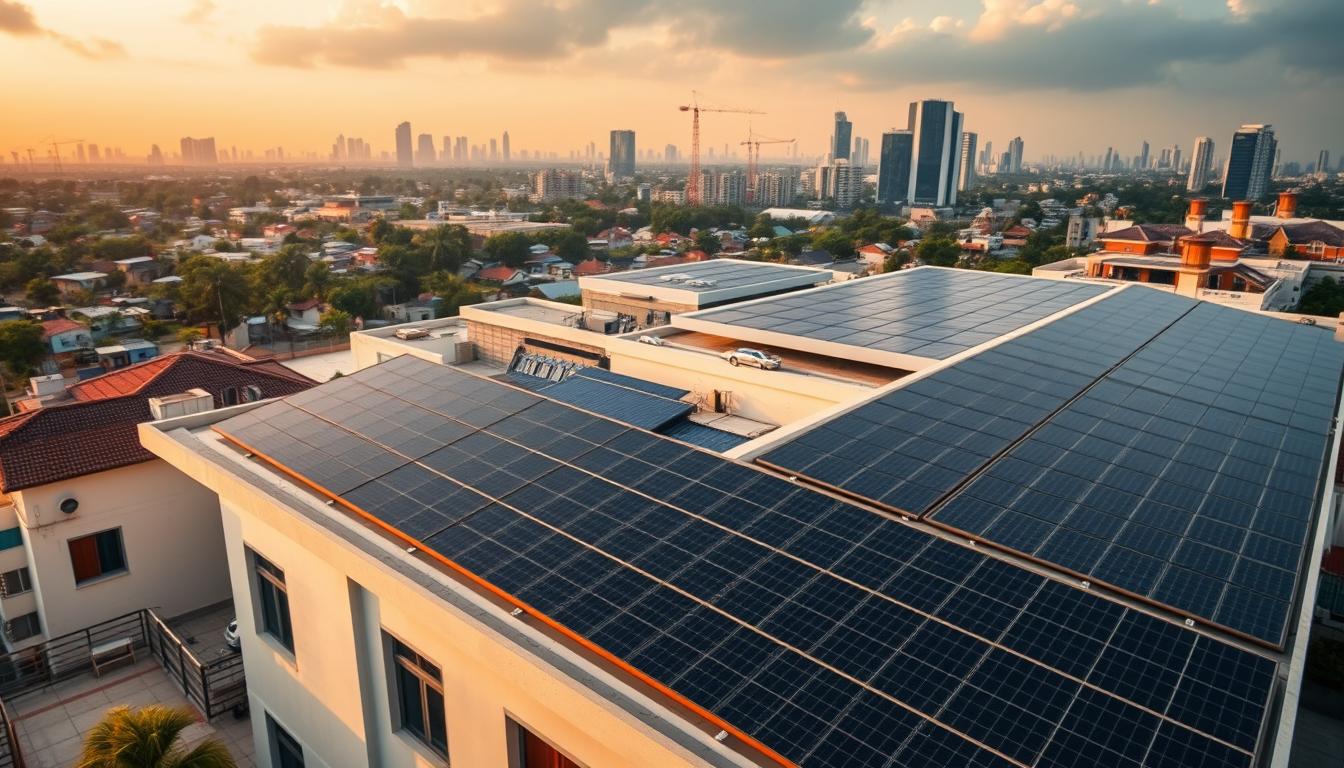
The PM Solar Rooftop Yojana 2025 is a big step by the Government of India. It aims to boost solar energy use. This program gives financial help to both homes and businesses to switch to solar power.
It has different subsidies for homes and businesses. This helps meet their unique energy needs and budgets. With a focus on green energy, this program is key for India’s solar goals and a sustainable future.
Key Takeaways
- Promotes solar energy adoption in India through targeted financial incentives.
- Distinguishes between residential and industrial subsidies for tailored assistance.
- Supports government objectives to enhance renewable energy resources.
- Aims to alleviate financial burdens associated with solar rooftop installations.
- Encourages significant contributions towards sustainability and environmental goals.
Understanding the PM Solar Rooftop Yojana
The PM Solar Rooftop Yojana was launched in 2015 to boost solar energy use in India. It aims to make a big leap in solar energy, showing the government’s dedication to green energy. The goal is to hit 40 GW of rooftop solar by 2025, fitting into India’s solar energy plan.
Through this program, the government offers government solar subsidies to help with setup and funding. This makes solar energy easier for homes and businesses to get. The incentives push for more solar tech, cutting down carbon emissions. This move helps India become energy-independent and boosts its role in global green energy.
With TradePlus: you get bankable Adani modules (SHINE MonoPERC & SHINE TOPCon), rail/structure kits, DC/AC protection, earthing, and a DISCOM-ready documentation pack so approvals and subsidy claims don’t stall.
Key Benefits of the PM Solar Rooftop Yojana
The PM Solar Rooftop Yojana offers many benefits for homes and businesses. It helps cut down electricity costs, saving money and keeping energy use in control. This program boosts the use of solar energy, reducing our need for fossil fuels.
It also comes with tax breaks to encourage green energy investments. Adding solar panels can even raise your property’s value. Plus, you can make money by selling extra electricity to the grid.
This program is key for the environment too. It lowers carbon emissions, making the air cleaner in cities. It’s a big step towards fighting climate change and improving energy use in India.
TradePlus adds value: accurate bill-backed system sizing, module selection (MonoPERC vs TOPCon), shading/tilt design, and payback estimates tailored to MP tariffs and roofs.
Eligibility Criteria for Residential Installations
To get into the PM Solar Rooftop Yojana, you need to meet certain rules. You must own your home outright and have a clear title. Your roof should be big enough, at least 100 square feet, and get enough sunlight.
The roof also needs to be strong enough to hold solar panels. This is key for the system to work well.
The system must connect to the grid to share energy. There’s also a limit on how much money you can make each year. This rule helps make sure the subsidy goes to those who really need it.
When you apply, you’ll need to show who you are. You’ll need a valid PAN card and Aadhaar number. These help make sure everything is correct and follow the PM Solar Rooftop Yojana rules.
How TradePlus helps homeowners: free pre-check of rooftop feasibility, suggested system capacity (kW), indicative subsidy slab, and a ready-to-submit file for DISCOM and portal uploads.
Eligibility Criteria for Industrial Installations
To be eligible for the PM Solar Rooftop Yojana, businesses must meet certain requirements. They need to be registered in India and have a valid GST number. This shows they follow local laws.
They also need enough space on their roofs for solar panels. The area should be big enough to hold the panels well. Plus, they must connect to the power grid to use the solar energy.
The amount of energy a business uses is important too. They should use a lot of energy to make solar panels worth it. This makes the investment in solar technology pay off.
Following local rules and getting the right permits is key. This ensures the installation is safe and works well. It also helps businesses use energy better and be more sustainable.
TradePlus for industry/C&I: audit of load profile, roof & structure checks, optimal module choice (Adani SHINE TOPCon for space-constrained roofs), net-metering files, and liaison with EPC for method statements and QA/torque logs.
Subsidy Structure for Residential Installations
The PM Solar Rooftop Yojana offers a strong subsidy for homes to use solar energy. It helps save money by giving subsidies based on system size. Knowing how it works makes applying for solar subsidies easier for homeowners.
Current Percentage of Subsidy
The subsidy for home solar systems can be up to 40%. The amount depends on the system’s size:
| System Capacity (kW) | Subsidy Percentage |
|---|---|
| Up to 3 kW | 40% |
| 3 to 10 kW | 20% |
| Above 10 kW | 0% |
This system encourages smaller systems. It gives a big push for homes to switch to green energy.
How the Subsidy is Applied
Applying for solar subsidies is easy. After installing the system, an inspection by approved people is needed. If it passes, the subsidy goes straight to the buyer through banks or financial groups. This makes solar energy affordable, with less upfront cost for families.
Subsidy Structure for Industrial Installations
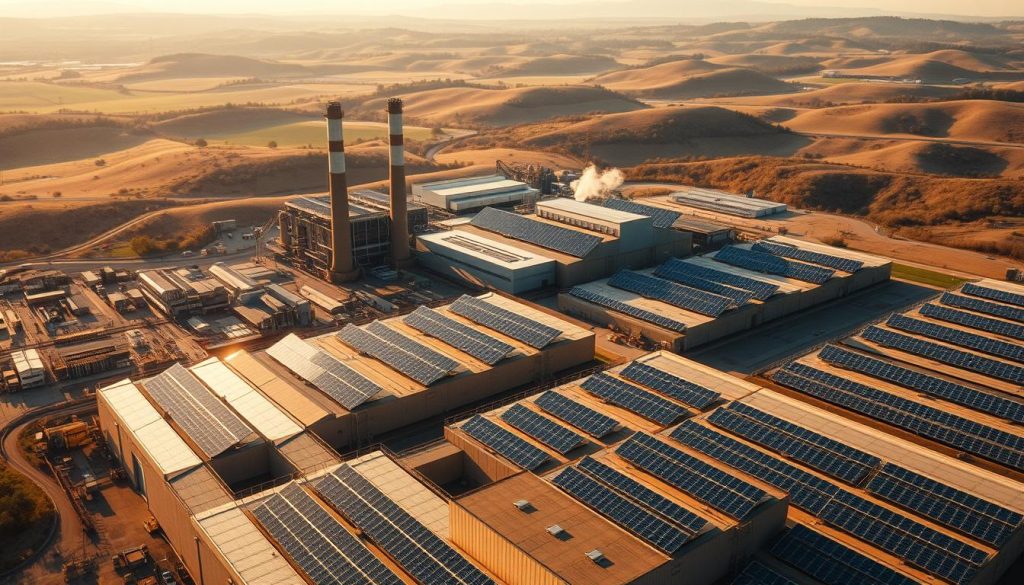
The PM Solar Rooftop Yojana offers big financial help to businesses wanting to use solar energy. The subsidy can be 20% to 30% of the cost, based on the system’s size. This help is for systems over 3 kW, helping businesses cut costs and go green.
Current Percentage of Subsidy
The *current percentage of subsidy* for industrial setups depends on the solar system’s size. Here’s how it breaks down:
| System Capacity (kW) | Subsidy Percentage (%) |
|---|---|
| Up to 10 kW | 30% |
| 11 kW to 100 kW | 20% |
| Above 100 kW | 20% |
Implementation and Application Process
Apply via the notified portal, submit GST/identity/electricity data, receive feasibility, execute EPC, commission, inspection, and subsidy release.
TradePlus for C&I: prepares portal application, coordinates with your EPC for commissioning docs, and assembles the bank-transfer package post-inspection.
PM Solar Rooftop Yojana 2025: Process for Residential Installations
The process starts with picking a registered solar installer. Homeowners need to find a qualified professional for help. They must fill out a subsidy application form and provide documents like property ownership proof and income proof.
After submitting the application, the solar installer will do a site survey. This step is key to suggest the right solar system for the homeowner’s needs. Once installed, inspections are done to check if everything meets the PM Solar Rooftop Yojana guidelines.
The last step is getting the subsidy after passing the inspections. Homeowners should reach out to local offices for help anytime. This makes the solar installation process easier.
PM Solar Rooftop Yojana 2025: Process for Industrial Installations
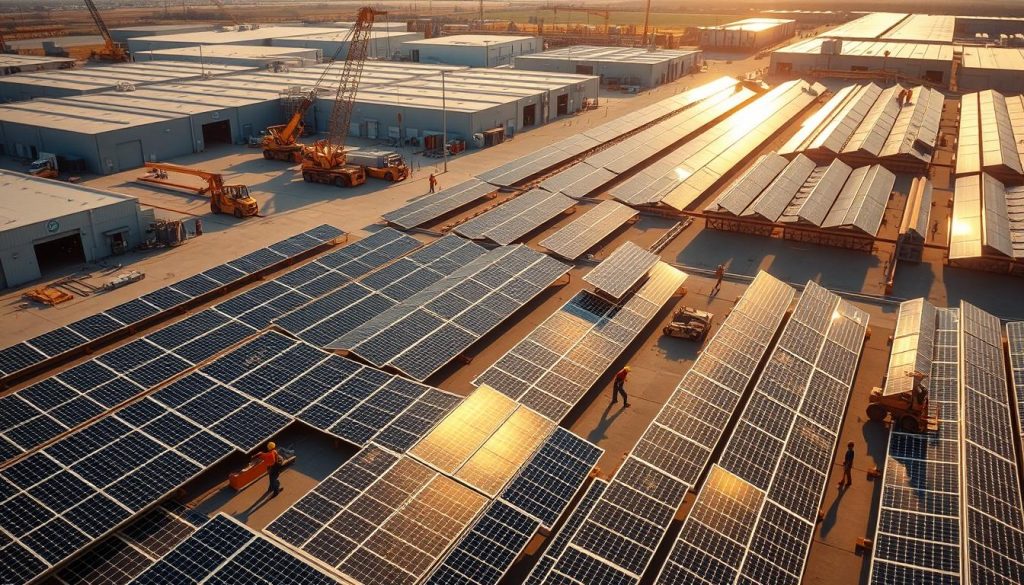
For businesses wanting to use solar energy, the PM Solar Rooftop Yojana application process is key. First, companies must pick a certified solar installer. This installer will assess the company’s needs for solar energy.
Choose a registered installer/EPC.
Submit ownership/ID docs and electricity bills.
Site survey → capacity finalization → quotation.
Installation, testing, and inspection.
Net-metering and subsidy credit.
TradePlus simplifies each step: verified Adani supply, safe mounting structures for MP wind zones, installation QA, and a tracked checklist for approvals and disbursal.
| Steps in Application Process | Description |
|---|---|
| Select Vendor | Choose a certified solar installation provider. |
| Document Submission | Provide GST registration, identity proof, and electricity bills. |
| Proposal Review | Application and proposal submitted for subsidy approval. |
| System Setup | Initiate installation of solar systems based on approved proposal. |
| Inspection | Mendatory checks to validate compliance with standards. |
TradePlus Guidance for Navigating Subsidies
Understanding the PM Solar Rooftop Yojana can be tough. TradePlus offers detailed guidance for solar installations and helps both individuals and businesses navigate subsidies end-to-end:
- Product supply: Adani SHINE MonoPERC & SHINE TOPCon modules, aluminium/HDG structures, DC cables, MC4, AC/DC protection, earthing kits.
- Design & docs: load/tilt design, drawings, BOQ, test reports, commissioning pack.
- Paperwork: portal application, net-metering/subsidy files, DISCOM liaison.
- Execution: EPC coordination, on-site QA, safety compliance.
- After-sales: AMC, performance audits, warranty facilitation, and spares.
Start here with Tradeplusresources Adani solar
Conclusion
The PM Solar Rooftop Yojana 2025 is a big step towards using more solar energy in India. It helps both homes and businesses use solar panels. This move is backed by a lot of money and is key to making India more sustainable and energy-independent.
Using solar panels has many benefits, like saving money and helping the planet. It makes our energy use cleaner and more sustainable. This is good for everyone.
To get the most out of this program, it’s important to know who can apply and how. Both people and businesses should join the PM Solar Rooftop Yojana. It’s a great way to use solar energy well.
India’s future with solar energy looks very promising. It will help us use less fossil fuel and cut down on pollution. This is a big step towards a cleaner environment.
As we move towards using more renewable energy, using solar technology is key. It helps us save money on energy and protect the environment. By joining the PM Solar Rooftop Yojana, we can help make India’s energy future sustainable.
0 Comments